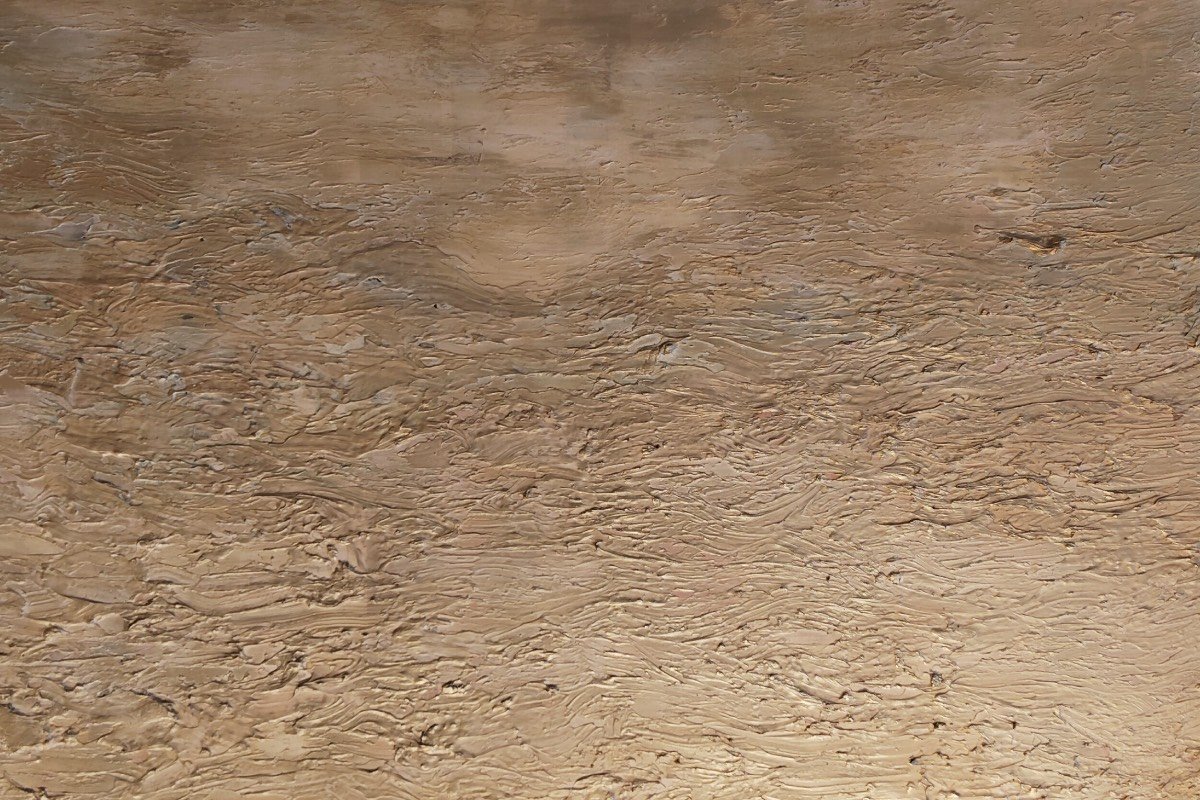
“Traces of Quiet Earth” explores abstraction through the language of texture, erosion, and atmospheric stillness. The artwork transforms a restrained monochromatic surface into an immersive field where movement, material, and memory merge into a contemplative experience. Through layered textures and muted earth tones, the composition reflects the quiet rhythms of nature and the enduring presence of time embedded within physical surfaces.
The artwork unfolds horizontally like a vast terrain shaped gradually by unseen natural forces. Waves of textured gestures move across the canvas with a rhythmic flow that resembles shifting sediment, eroded stone, river currents, dried earth, or wind patterns carved into sand. These flowing marks create an organic movement that feels both expansive and intimate, inviting viewers to enter the artwork slowly through observation rather than immediate interpretation.
A muted palette of limestone, clay, ash, pale taupe, weathered ivory, and mineral grey defines the atmosphere of the composition. These subtle earth tones create a sense of calm and timelessness, allowing texture to become the central focus of the artwork. The restrained colours shift gently across the surface, producing delicate tonal variations that reveal themselves gradually over time. Rather than relying on dramatic colour relationships, the painting communicates through nuance, balance, and quiet emotional resonance.
Texture functions as both subject and language within “Traces of Quiet Earth.” Thick layers of paint are scraped, folded, and pressed across the canvas, creating a sculptural terrain filled with ridges, grooves, and sediment-like formations. Every gesture remains visible, preserving traces of movement and process within the surface itself. The artwork embraces imperfection and material honesty, allowing the history of creation to remain embedded within the composition.
The physicality of the textured surface creates a strong connection between abstraction and the natural world. The layered marks resemble geological formations shaped through centuries of erosion and transformation. Certain passages evoke fossilized landscapes or weathered architectural surfaces, while others feel fluid and almost atmospheric. These shifting associations remain intentionally open, allowing viewers to project personal memories and emotional experiences onto the artwork.
Stillness is a defining presence throughout the composition. The artwork avoids visual excess and instead embraces restraint and spaciousness. There is no singular focal point demanding attention. Instead, the surface unfolds gradually, encouraging the eye to move gently across the textured field. This quiet rhythm creates a meditative atmosphere where contemplation becomes central to the viewing experience.
Light plays a subtle yet transformative role within the artwork. The raised textures capture illumination differently across the surface, creating delicate interactions between shadow and brightness. Certain areas appear luminous and soft, while recessed passages hold darker tones that introduce depth and quiet tension. As surrounding light changes, the artwork itself seems to evolve continuously, emphasizing the fluid relationship between perception and atmosphere.
The horizontal movement within the composition evokes the endless continuity of natural landscapes. The textured layers resemble tidal patterns, desert winds, shifting soil, or distant horizons dissolving into haze. Yet the artwork never settles into literal representation. Abstraction remains essential, allowing the painting to exist between landscape and emotion, material and memory.
There is a profound sense of time embedded within the textured surface. The painting feels weathered and ancient, as though shaped slowly through cycles of accumulation and erosion. Every mark suggests movement through time rather than a fixed moment. The artwork reflects the idea that transformation is gradual, layered, and continuous. Beauty emerges through imperfection, wear, and subtle change rather than through permanence or precision.
The restrained palette deepens the contemplative quality of the composition. By limiting colour intensity, the artwork shifts attention toward texture, rhythm, and atmosphere. Tiny variations in tone become significant, encouraging close observation. The surface reveals endless details when viewed slowly, transforming what initially appears minimal into something richly layered and emotionally complex.
“Traces of Quiet Earth” also explores the relationship between fragility and endurance. The softened tonal transitions suggest delicacy and impermanence, while the dense textured layers convey strength and stability. This tension between softness and solidity reflects emotional realities often found within human experience. Quietness within the artwork does not suggest emptiness or weakness, but rather resilience, patience, and depth.
The composition invites prolonged engagement. From a distance, the artwork appears calm, restrained, and almost minimal. Up close, however, intricate textures and subtle gestures emerge continuously across the surface. Small ridges, folds, and layered marks reveal themselves gradually, creating a visual experience that evolves over time. This shifting relationship between simplicity and complexity gives the artwork a quiet yet powerful presence.
Abstraction within the artwork becomes a space for reflection rather than explanation. The painting does not impose a singular narrative or symbolic meaning. Instead, it creates an open environment where viewers may encounter sensations of stillness, memory, distance, and connection to the natural world. The textured surface becomes both physical terrain and emotional landscape.
Ultimately, “Traces of Quiet Earth” becomes a meditation on silence, transformation, and material memory. Through its layered textures and earthbound atmosphere, the artwork celebrates the subtle beauty found within erosion, stillness, and impermanence. The composition encourages viewers to slow down, observe carefully, and reconnect with quieter forms of perception often overshadowed within contemporary life.
Through abstraction, texture becomes time, surface becomes memory, and silence becomes presence.
