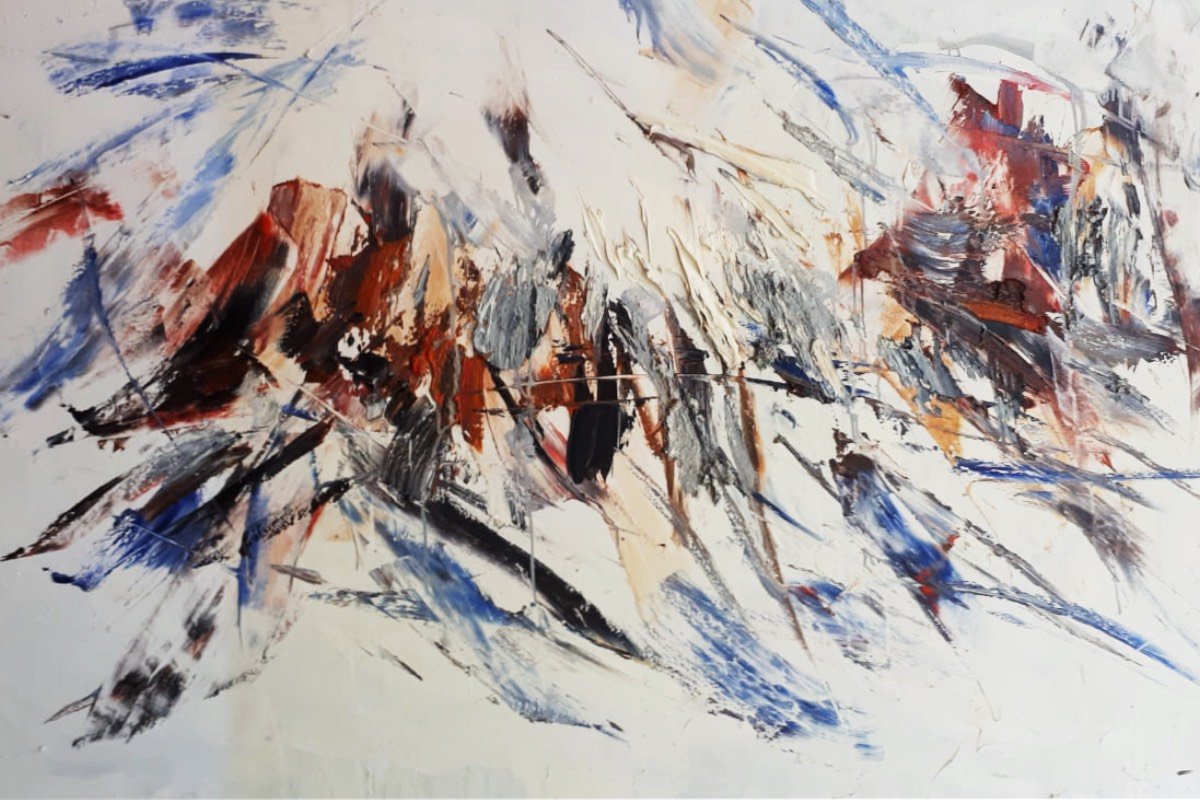
This abstract painting explores movement, emotion, and energy through expressive brushstrokes and layered textures. The composition is filled with sweeping lines, fragmented shapes, and contrasting colors that create a sense of motion across the canvas. Shades of deep blue, black, rust red, grey, and soft beige interact with large areas of white space, creating balance between intensity and openness. The painting does not focus on one recognizable image or subject. Instead, it captures emotion and atmosphere through abstraction, allowing viewers to form personal interpretations based on their own experiences and imagination.
The title *Fragments of Motion* reflects the broken yet connected forms that move throughout the composition. The scattered marks and overlapping strokes appear like moments frozen in time, capturing energy as it shifts and changes. Some areas feel chaotic and forceful, while others appear lighter and more fluid. This contrast creates rhythm within the artwork and reflects the complexity of emotion and movement. The painting becomes a visual expression of thoughts, memories, and experiences that may feel fragmented but still remain connected beneath the surface.
Color plays an important role in shaping the emotional atmosphere of the piece. Strong rust reds and dark blacks introduce intensity and strength, while softer blues and greys create movement and calmness. The white background provides breathing space within the composition, allowing each mark and texture to stand out more clearly. The interaction between warm and cool colors creates tension and harmony at the same time. Bright and dark elements work together to guide the viewer’s eye across the painting, creating a feeling of continuous motion.
The brushwork is energetic and expressive. Bold sweeping strokes cut across the canvas in different directions, creating layers of movement and unpredictability. Some marks appear rough and aggressive, while others are soft and faded, giving the composition a balance between force and delicacy. The visible gestures of the brush reveal the physical process behind the artwork, allowing emotion and instinct to become part of the final image. The movement of the paint feels spontaneous and natural, as though the composition developed freely rather than following a strict plan.
Texture adds depth and emotion throughout the painting. Thick areas of paint contrast against thin transparent washes, creating variation across the surface. Scraped lines, overlapping strokes, and layered marks give the artwork a raw and unfinished quality that adds authenticity. Certain textures appear sharp and jagged, while others dissolve softly into the background. This combination creates visual tension and keeps the surface active and engaging. The layered textures also suggest the passage of time, as though each mark records a different moment or emotion within the creative process.
The creative process focused heavily on spontaneity and experimentation. Paint was applied quickly in some areas and slowly built up in others through repeated layering. Gestural marks, scraping techniques, and loose brush movements allowed the materials to move naturally across the canvas. Instead of aiming for perfection or control, the process embraced instinct and emotional expression. Certain marks were intentionally left visible to preserve the energy and honesty of the movement. This approach allowed the painting to feel alive and immediate rather than polished or overly planned.
Movement is the central theme throughout the artwork. Every line and brushstroke contributes to a sense of motion that travels across the composition. The sweeping blue strokes create fluidity, while darker angular marks introduce direction and force. The eye moves continuously through the painting without settling in one place for too long. This restless energy reflects emotional shifts, moments of change, and the unpredictability of human experience. The composition feels active and evolving, as though it could continue moving beyond the edges of the canvas.
The painting also explores the relationship between chaos and structure. At first glance, the artwork may appear spontaneous and uncontrolled, but closer observation reveals balance within the arrangement of shapes and colors. The central forms create focus and weight, while lighter areas provide openness and calm. Repeated lines and colors create visual unity across the composition, connecting the fragmented marks together. This balance between disorder and harmony reflects the idea that emotions and experiences can feel overwhelming while still forming meaningful patterns over time.
The abstract nature of the painting allows space for interpretation and imagination. Some viewers may see landscapes, storms, figures, or natural elements hidden within the brushstrokes, while others may connect more strongly with the emotional energy of the piece. The absence of one clear subject encourages viewers to engage with the artwork personally rather than searching for a fixed meaning. The painting becomes an experience shaped by observation, memory, and feeling.
Light and contrast also contribute to the atmosphere of the work. Bright white areas create openness and allow darker colors to appear more dramatic and intense. The contrast between dense textured sections and empty spaces creates depth and movement throughout the composition. These visual shifts give the painting a dynamic quality that changes depending on distance and perspective. Small details become visible through closer observation, rewarding attention and curiosity.
Ultimately, *Fragments of Motion* represents emotional energy, transformation, and the beauty found within imperfection and movement. Through expressive brushwork, layered textures, and contrasting colors, the painting captures moments that feel both powerful and temporary. The artwork reflects the idea that emotion and experience are rarely still or perfectly organized. Instead, they exist as shifting fragments that continue to shape identity and perception over time.
By combining intensity with openness and structure with spontaneity, the painting creates a balance between chaos and harmony. *Fragments of Motion* invites viewers to experience movement not only visually, but emotionally, encouraging reflection on change, memory, and the energy that exists beneath the surface of everyday life.
