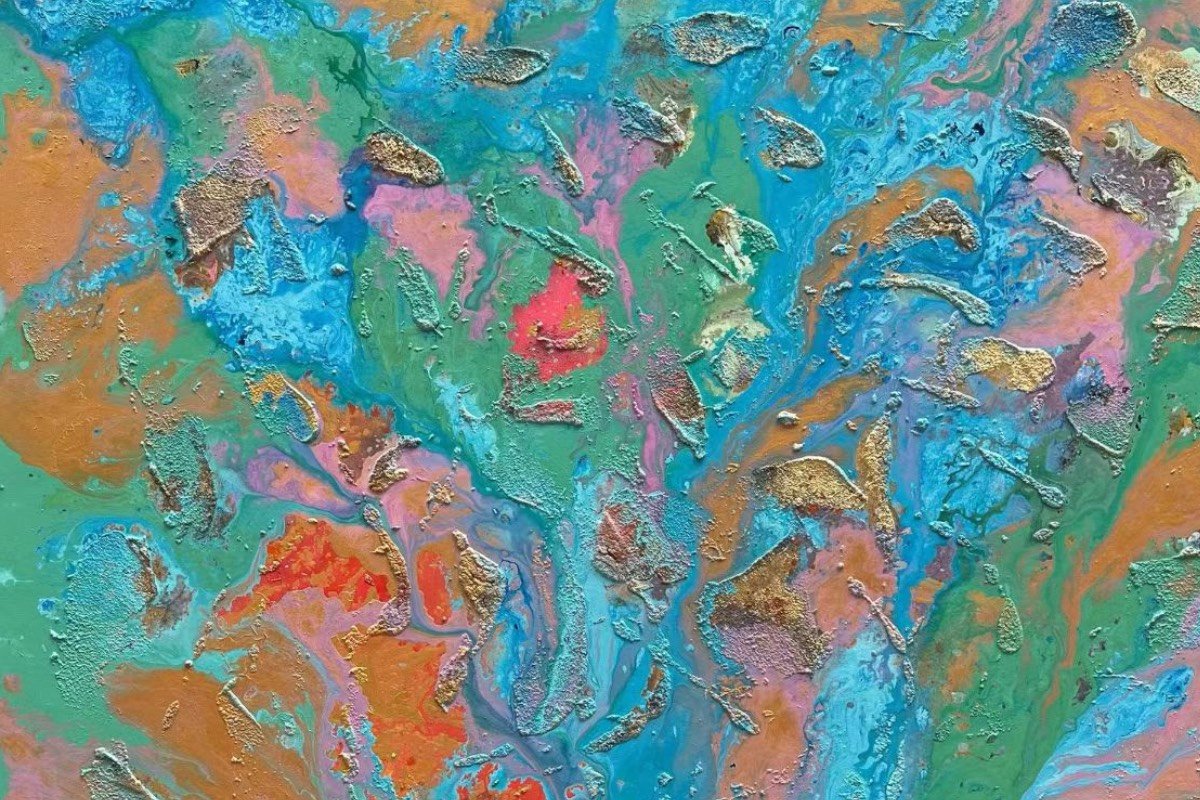
This abstract painting explores the movement, energy, and beauty found within the natural world. Through flowing colors, layered textures, and organic forms, the artwork captures the feeling of nature constantly shifting and evolving. Shades of turquoise, aqua, green, coral, lavender, and gold move across the surface like rivers, minerals, oceans, and landscapes shaped over time. The painting does not present one specific scene from nature. Instead, it combines different natural elements into a dreamlike environment filled with movement, growth, and transformation.
The title *Nature’s Rhythm* reflects the continuous cycles that exist within the environment. Water flows, plants grow, rocks erode, and seasons change in repeating patterns that create balance within nature. The painting visually represents this rhythm through swirling forms, layered paint, and textured surfaces that appear connected yet unpredictable. Every section of the composition feels alive, as though the colors and textures continue moving beyond the edges of the canvas. This sense of motion creates an immersive experience that encourages viewers to slow down and observe the details hidden within the artwork.
Color plays a major role in expressing the connection to nature. Bright blues and greens dominate the composition, creating associations with oceans, forests, rivers, and tropical landscapes. These cool colors bring a feeling of calmness, freshness, and renewal. Soft pinks and warm orange tones add contrast and energy, resembling sunsets, coral reefs, flowers, and minerals found in the earth. Metallic gold textures catch light across the surface, adding depth and creating the appearance of sunlight reflecting on water or stone. The interaction between cool and warm tones creates harmony throughout the painting while also adding excitement and movement.
Texture is one of the strongest elements within the artwork. Thick raised surfaces, rough patches, and flowing paint create a tactile quality that makes the painting feel natural and organic. Certain areas resemble weathered rocks, sand, coral, or dried earth shaped by time and erosion. Other sections appear smooth and fluid, similar to water currents or shifting clouds. This variation in texture reflects the diversity found in nature itself, where softness and roughness coexist within the same environment. The textured layers also create shadows and highlights that change depending on the angle of light, allowing the artwork to appear different throughout the day.
The creative process embraced experimentation and spontaneity. Pouring, scraping, layering, and blending techniques allowed the materials to move naturally across the canvas. Instead of controlling every detail, the process welcomed unpredictability and chance. This approach mirrors nature, where growth and transformation often happen without strict structure or perfection. Some layers remain partially hidden beneath others, creating depth and a sense of history within the painting. These concealed surfaces symbolize the unseen processes that occur beneath the surface of the earth, oceans, and natural landscapes.
Nature’s ability to transform over time strongly influenced the composition. The painting reflects ideas of erosion, renewal, and growth through constantly shifting shapes and colors. Flowing forms appear to merge and separate like rivers branching through landscapes or waves crashing against rocks. The layered textures suggest natural surfaces that have been shaped slowly through time and movement. This connection to transformation highlights the beauty of change and the idea that nothing in nature remains completely still.
The artwork also explores the relationship between chaos and harmony. At first glance, the painting may appear random because of its energetic marks and scattered textures. However, closer observation reveals balance within the composition. Colors repeat throughout the surface, and flowing shapes guide the viewer’s eye naturally across the canvas. Every mark contributes to the overall rhythm of the piece. This balance reflects the natural world itself, where ecosystems may seem wild and unpredictable while still functioning in harmony.
Light plays an important role in creating atmosphere within the painting. Metallic and raised textures reflect light differently across the surface, creating movement and dimension. Bright areas seem to glow against darker sections, adding depth and drawing attention toward specific details. These reflective qualities create an ever-changing experience for viewers, similar to how sunlight transforms landscapes, oceans, and forests throughout the day. The painting becomes more dynamic as the light shifts, making each viewing experience slightly different.
The absence of recognizable forms allows the artwork to remain open to interpretation. Some viewers may see underwater environments, tropical reefs, flowing rivers, or aerial landscapes, while others may focus on emotional or imaginative connections. This openness encourages personal reflection and imagination. Rather than presenting one clear message, the painting invites viewers to experience the work emotionally and visually. The abstract composition allows nature to be felt instead of directly illustrated.
The painting also celebrates the beauty of imperfection found in the environment. Uneven textures, unexpected marks, and spontaneous color combinations contribute to the natural quality of the piece. These imperfections create authenticity and energy, reminding viewers that nature’s beauty often exists within irregularity and change. The artwork avoids rigid structure, allowing freedom and movement to guide the final result.
Ultimately, *Nature’s Rhythm* captures the energy, complexity, and peacefulness of the natural world through abstraction. The painting reflects the movement of water, the texture of earth, the glow of sunlight, and the endless process of transformation found in nature. Through layered colors, organic forms, and expressive textures, the artwork creates a space where imagination and environment become connected. The piece invites viewers to appreciate the beauty of movement, growth, and harmony that exists within both nature and human experience.
